
The Foundation of Movement: Why Your Shoes Are Wrecking Your Body (and Why Barefoot is the Cure)
I spend a lot of time looking at hips, spines, and shoulders. But more often than not, when a client comes to me with chronic back pain or a "dodgy" knee, the first thing I ask them to do is take off their shoes.
Most of us spend 90% of our lives in what I call "sensory deprivation chambers" for the feet. We’ve been told that we need "support," "cushioning," and "stability" from our footwear. In reality, modern shoes have become a cast that weakens the foot, dulls our balance, and creates a ripple effect of dysfunction that travels all the way up to the neck.
If you want to fix your movement, you have to fix your foundation. Here is the truth about why barefoot shoes aren't just a "trend"—they are a biological necessity.
1. The Geometry of a Disaster: What Modern Shoes Do to You
Modern footwear—from high-street trainers to formal brogues—is usually designed for fashion, not human biology. There are three main "design flaws" in standard shoes that wreak havoc on your biomechanics:
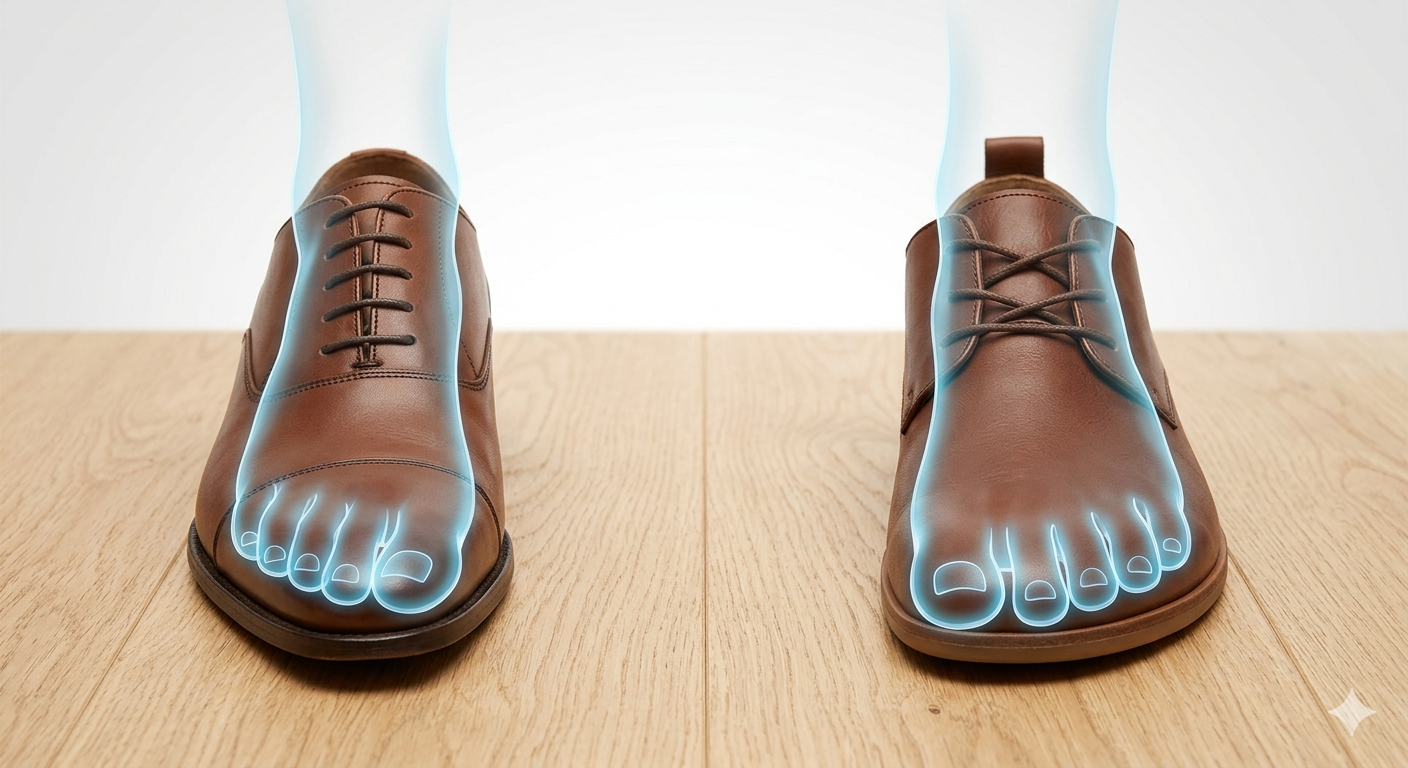
The Narrow Toe Box (The "Squish")
Look at a baby’s foot. It is widest at the toes. Now look at a standard shoe. It tapers to a point at the front. By squeezing your toes together, you disable the Great Toe (the big toe). Your big toe is your primary stabiliser; when it can't splay out, your arch collapses, and your foot "pronates" excessively.
The Heel Elevation (The "Tip")
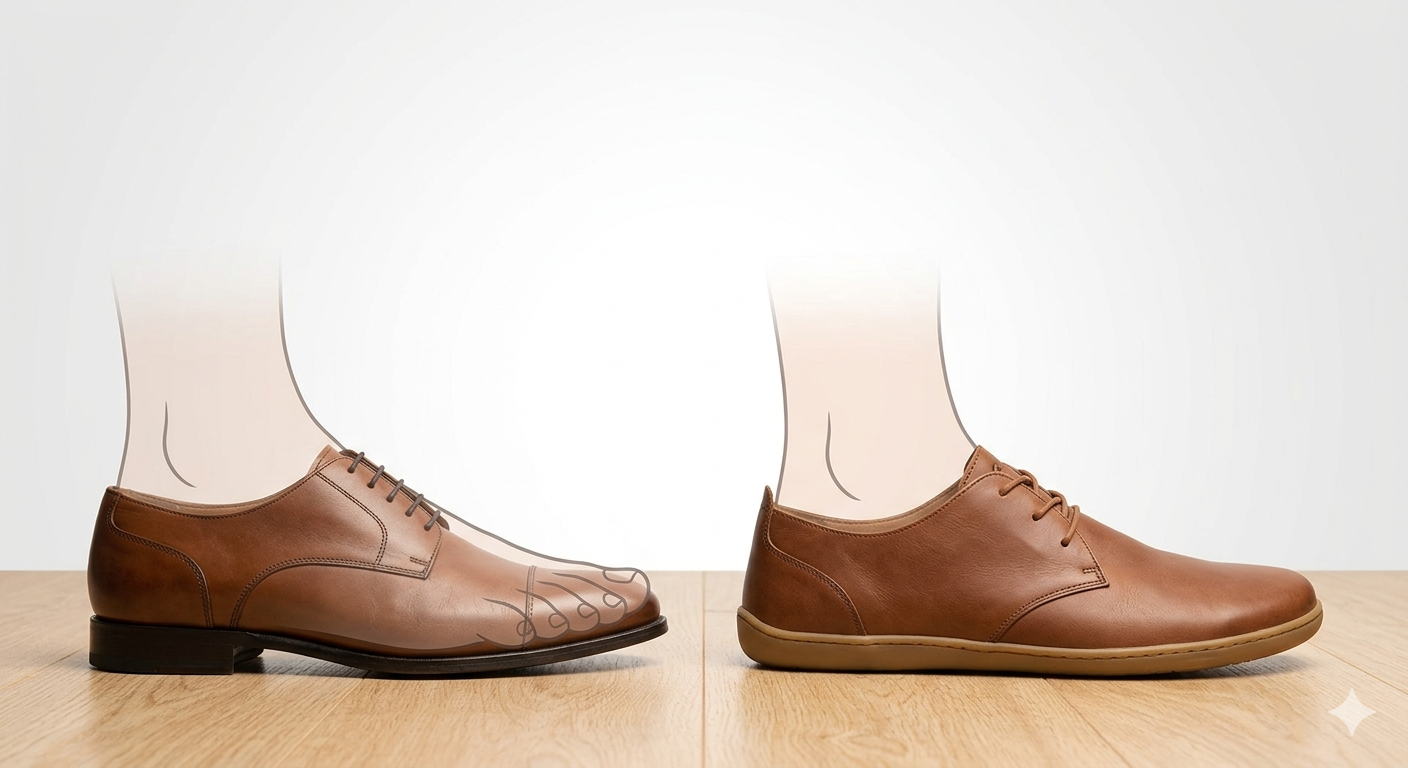
Even "flat" trainers usually have a slight lift in the heel. This puts your body on a permanent downhill slope. To keep from falling over, your knees have to bend slightly, your pelvis tilts forward (hello, Anterior Pelvic Tilt!), and your lower back has to arch to compensate. You are essentially standing on a wedge all day, which shortens your calves and throws your entire postural alignment out of gear.
Excessive Cushioning (The "Muffle")
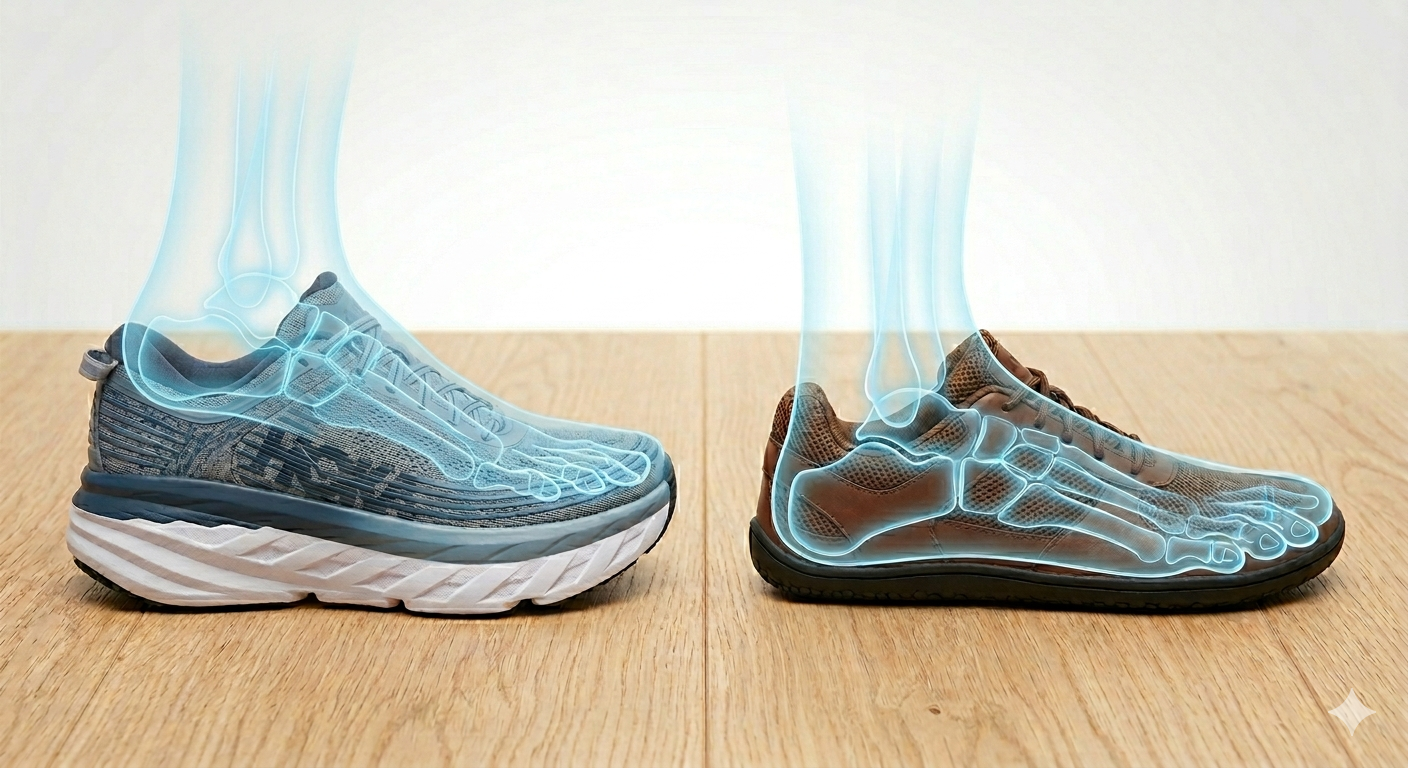
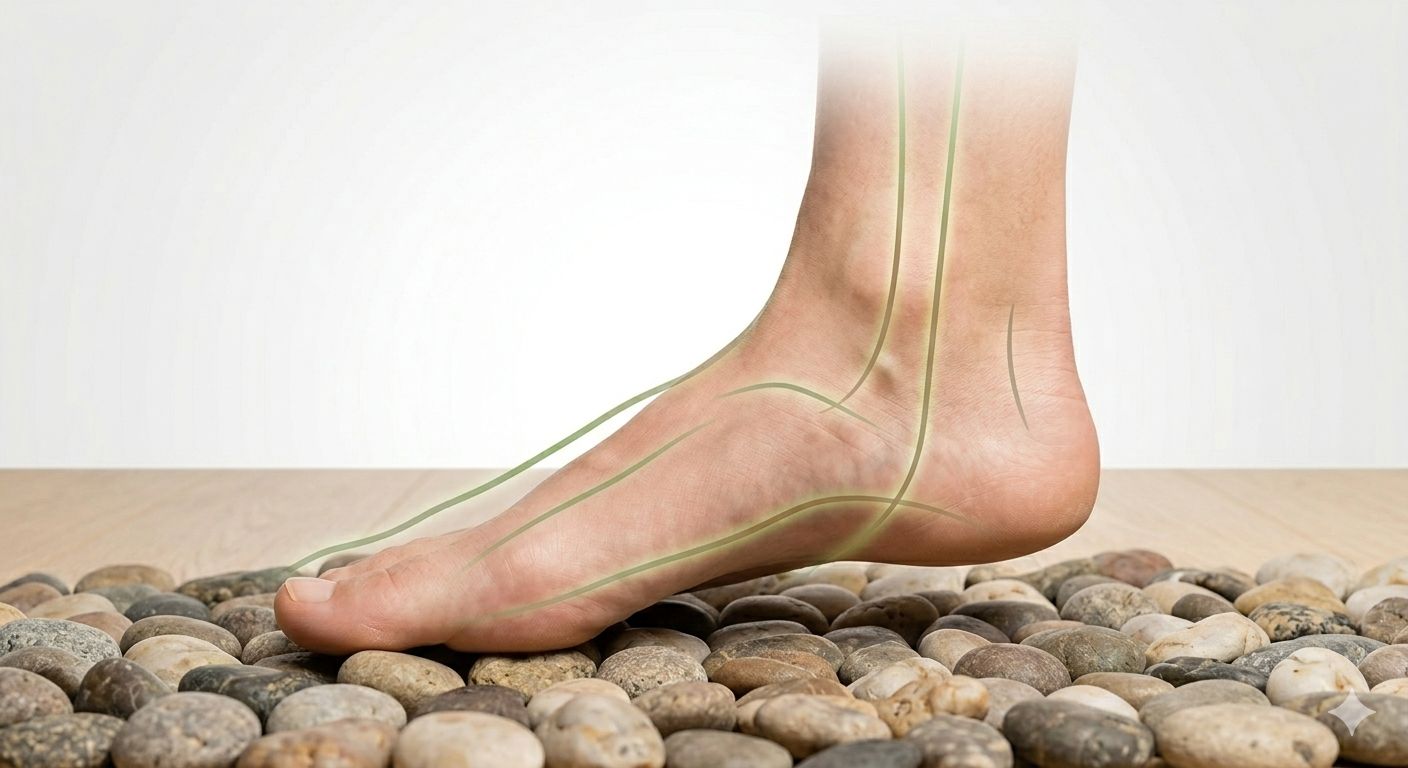
Your feet have over 200,000 nerve endings. They are designed to "feel" the ground so your brain knows how to adjust your balance. When you walk on 2 inches of foam, your brain is "blind." This leads to harder heel strikes (because you can't feel the impact) and poorer balance, as your nervous system isn't getting the data it needs from the floor.
2. The Chain Reaction: How Foot Dysfunction Becomes Back Pain
The body is a kinetic chain. Nothing happens in isolation. If your feet aren't functioning, your body will find the "stability" it needs elsewhere—usually by locking up your joints.
The Ankles: When a shoe provides all the "support," the muscles that stabilise the ankle go to sleep. This leads to chronic "weak ankles" and frequent sprains.
The Knees: If your big toe can’t stabilise you, your foot collapses inward. This forces the knee to cave in (valgus stress), which is a leading cause of ACL issues and "runner's knee."
The Hips & Back: Remember our post on Core Strength? It’s nearly impossible to maintain a neutral pelvis and a braced core if your heels are elevated and your toes are squashed. Your lower back ends up taking the strain that your feet should be absorbing.
3. The Barefoot Solution: Why Minimalist Footwear Matters
A "Barefoot" or "Minimalist" shoe is defined by three things: A wide toe box, a zero-drop sole (completely flat), and a thin, flexible bottom.
When you transition to this type of footwear, you aren't just changing your shoes; you are "re-wilding" your feet.
Restoring the Natural Arch
The arch of your foot is a masterpiece of engineering—it’s a dynamic bridge designed to support your entire body weight. However, like any muscle, if you don't use it, you lose it. By removing "arch support," you force the internal muscles of the foot (the intrinsics) to work again. Over time, your feet get stronger, and your natural arch returns.
Better Balance and Proprioception
With a thin sole, your brain can finally "see" the ground again. You become more agile, your reaction times improve, and you stop "clumping" onto your heels. You begin to move with the grace and lightness we were evolved for.
4. How to Transition Without Injury
You wouldn't try to run a marathon on your first day at the gym, and you shouldn't switch to barefoot shoes overnight. Your feet have been in "casts" for decades; they need time to wake up.
Start at Home: Spend as much time as possible completely barefoot in your house.
The "Movement Snack" Approach: Wear your barefoot shoes for short 20-minute walks. Increase the time by 10% each week.
Strengthen the "Short Foot": Practice picking up a towel with your toes or spreading your toes apart while sitting at your desk.
Listen to Your Calves: Because you’ve likely been wearing a heel lift, your calves will be tight. Use a foam roller or a lacrosse ball to release the tension as they adjust to their new, longer length.
The Bottom Line: Your Feet are the Foundation
You can spend a fortune on fancy ergonomic chairs and high-end gym memberships, but if you are still shoving your feet into restrictive footwear, you are fighting an uphill battle.
Real health starts from the ground up. Give your toes the space to breathe, your heels the ground to touch, and your nervous system the data it craves. Your feet—and your back, knees, and hips—will thank you for it.
Q&A: Barefoot Shoe Basics
Q: Are barefoot shoes bad for walking on concrete? A: It feels "hard" at first because you are used to the shoe absorbing the impact. Barefoot shoes force you to change your gait. Instead of slamming your heel down, you will naturally start to land softer and more mid-foot. Once your mechanics change, concrete is no longer an issue.
Q: I have "flat feet." Don't I need support? A: Most "flat feet" are actually just "weak feet." Imagine putting a weak arm in a sling forever—it would never get stronger. By gradually moving to minimalist footwear, you strengthen the muscles that actually create the arch.
Q: Can I wear barefoot shoes to the office? A: Absolutely. There are now several UK-based and European brands (like Vivobarefoot or Groundies) that make leather "Oxford" styles and Chelsea boots that look perfectly professional but have all the barefoot benefits.